




Significance of the Research
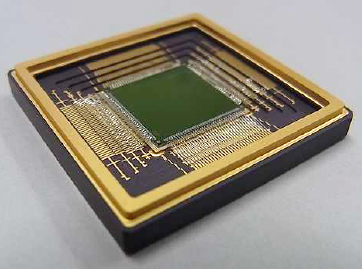
A large satellite is estimated to require several hundred thousand to one million space-grade components. Such components are indispensable for assembling spaceborne electronic systems; without a complete and reliable parts supply, satellite integration cannot be completed.
Because system performance is constrained by the capabilities of its constituent components, component performance defines the upper limit of overall satellite performance. Improving space-grade components is therefore essential to enhancing satellite functionality.
Through the strategic selection and development of critical components, this research supports flexible space activities and strengthens the international competitiveness of future satellite systems.
Research Objectives
Our R&D focus on components that critically influence satellite functionality and performance. The objectives are organized into four strategic categories of space components:
Radiation-Tolerant Use of Advanced Component Technologies in Space
This research focuses on understanding and characterizing the effects of space radiation—one of the most critical environmental factors—on advanced electronic components.
JAXA aims to systematically establish technologies and expertise for:
- Identifying and analyzing radiation effects
- Ensuring and enhancing radiation tolerance
- Predicting on-orbit behavior
- Conducting testing and analytical evaluations
These efforts will expand the range of electronic components available for spacecraft and thereby strengthen international competitiveness.


High-Performance Spaceborne Computing Device Technologies
- High-Performance Spaceborne Computing Device Technologies
- Ultra-low power consumption
- Functional integration of analog and digital elements
- High-speed signal transmission combining photonics and electronics
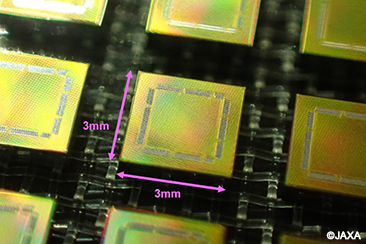
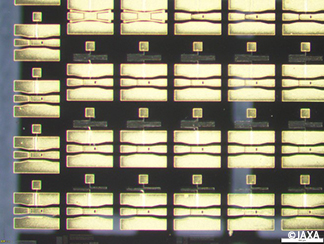
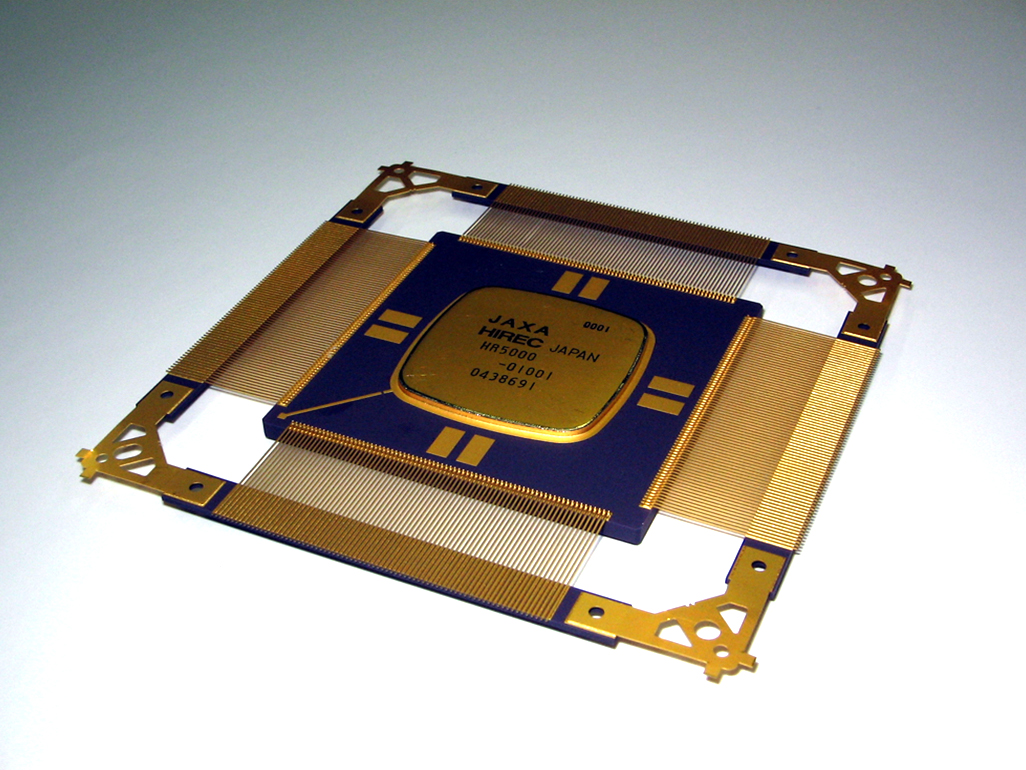
Building on previously developed technologies, including microprocessors and nano-bridge FPGAs, the focus is on maximizing their performance potential.
These advancements are expected to improve onboard computing performance and enable component miniaturization by simplifying system configurations and thermal-management requirements.
Power Device Technologies for High-Precision Power System Control
Spacecraft are increasingly adopting high-power systems comparable to those used in automotive and railway applications. Power devices—semiconductor components at the core of power control—are essential to this transition.
Accordingly, compound semiconductor technologies such as SiC and GaN, which are also emerging in terrestrial industries, are indispensable. This research aims to:
- Develop space-compatible compound semiconductor chips with superior environmental tolerance
- Establish operating conditions ensuring long-term reliability
- Develop packaging and mounting technologies that enhance fault tolerance
These efforts will support high-power control in space systems while enabling compact, highly reliable power components.
High-Density Packaging Technologies to Maximize Component Performance
Recent advances in component technologies have led to:
- Low-voltage, high-current operation in computing devices
- GHz-class high-frequency operation
- High-voltage, high-current power devices
This research focuses on supporting technologies—such as passive components, substrates, and packaging—that can accommodate these advancements.
These technologies will allow high-performance components to be used without limiting operating speed or temperature range, thereby contributing to diverse future missions.